kevin
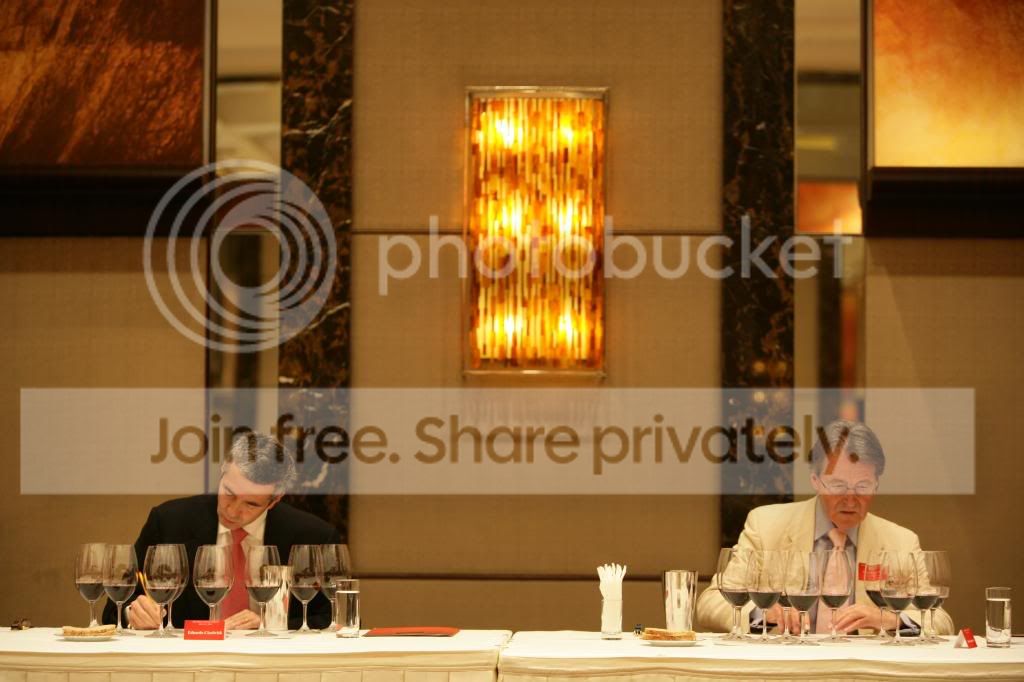
2008年7月8日,距离北京奥运会开幕刚好还有一个月,受智利著名的伊拉苏酒庄庄主爱德华多·查威克委托,由世界著名酒评家、《品醇客》(Decanter)杂志编辑史蒂芬·史普瑞尔(Steven Spurrier)主持,在北京香格里拉酒店举办了一场顶级盲品会。
47位来自大中华区的酒评家,葡萄酒作家,侍酒师以及买家受邀出席了这场北京盲品会。值得一提的是为新世界葡萄酒翻开崭新一页的1976年巴黎盲品会正是由史蒂芬·史普瑞尔主持的。
盲品的酒单如下:
三款法国一级名庄:拉菲(Chateau Lafite)2004,木桐(Chateau Mouton)2004,玛歌(Chateau Margaux)2004。
两款意大利顶级酒:西施佳亚(Sassicaia)2004,天娜(Tignanello)2004。
五款智利顶级酒:马克西米诺庄园主珍藏(Don Maximiano Founder’s Reserve)2004,2005,查威克(Chadwick)2004,2005,圣酿(Sena)2004。
考虑到智利的产区位于南半球,每年葡萄收成时间比北半球早半年,所以智利的酒加了两款2005年份。
11点钟,史蒂芬对北京盲品会评分细则做了介绍。每位评委们在经过认真品尝以后,评选出3款自己认为最佳的葡萄酒,分别给予3分,2分,1分。最后把所有评委的评分相加,得分最高者胜出。
11:30,盲品开始了,只见每位评判面前都有十只一模一样的高脚杯,里面按顺序装着十款已经提前倒好的酒。可以说款款都是好酒,单看颜色,很难辨得出差别。只见评委们端起酒杯仔细的观察颜色,闻香,品尝,然后吐在一旁的吐酒壶中,并记下笔记,再用清水漱口,再品第二杯……。
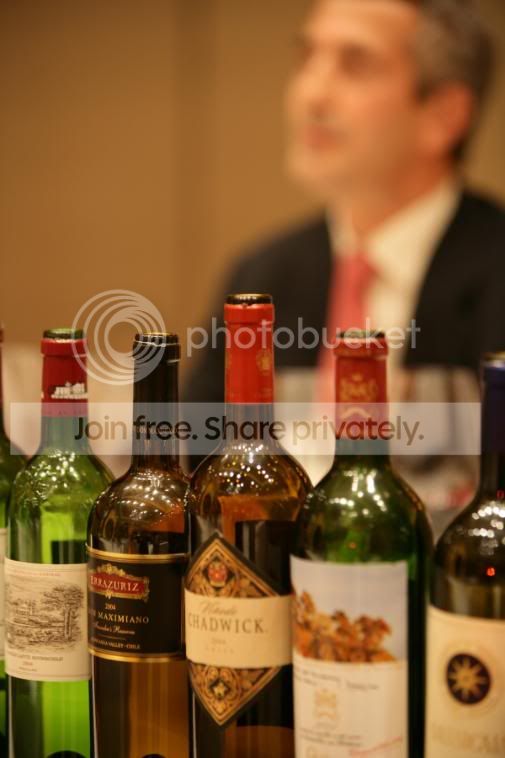
12:00,盲品结束。在现场统计结果时,史蒂芬先生逐一分享了他对十款酒的点评。从颜色上,香气,口感,余味等特征做了点评。每评完一款,专员就郑重端出那款盲品酒的真身,于是,马克西米诺,玛歌、拉菲、木桐西施佳雅等纷纷亮相,台下的评委们也纷纷发出惊叹声,或许是因为哪款酒自己猜着了而高兴,哪款酒错过了而遗憾。
最后的结果会怎样,哪些酒更能迎合大多数中国的专家评委们的口味喜好呢?是波尔多,是智利,还是托斯卡纳?答案马上就揭晓了。
最终,智利伊拉苏酒庄的马克西米诺庄园主珍藏受到最多评委的喜欢,其2005年份和2004年份分居第一和第二,意大利的西施佳雅排第三,查威克排名第四,而波尔多的木桐和拉菲则位列第五和第六。
北京盲品会,再次证明了智利伊拉苏的高端酒的确已经具备了很好的品质,足以媲美波尔多和托斯卡纳的顶级佳酿,这是智利葡萄酒多么了不起的成就!
北京盲品会,作为被称为智利葡萄酒产业发展里程碑的2004年柏林盲品会全球后续活动,也将中国人的口感喜好更好的传达给了酒商。
On July 8, 2008, with still one month to go to the opening of the Olympic Games, the renowned owner of the Chilean Winery Vina Errazuriz asked me to participate in the “first-class blind wine tasting” at the Shangri-La Hotel in Beijing. This event was presided by the worldwide celebrated wine critic Steven Spurrier, editor of the “Decanter” magazine.
Among the forty-seven guests from the central part of China that attended Beijing’s blind wine tasting were wine critics, wine producers, sommeliers and buyers. Steven Spurrier also presided the wine tasting held in Paris in 1976, where a new page was turned in the world’s production of wine grapes.
The following is a list of the wines:
Three varieties of first-class French wines:
Chateau Lafite 2004
Chateau Mouton 2004
Chateau Margaux 2004
Two varieties of first-class Italian wines:
Sassicaia 2004
Tignanello 2004
Five varieties of first-class Chilean wines:
Don Maximiano Founder’s Reserve 2004
Don Maximiano Founder’s Reserve 2005
Viñedo Chadwick 2004
Viñedo Chadwick 2005
Seña 2004
Since Chile lies in the Southern Hemisphere, its yearly grape harvest begins half a year earlier than the harvest in the Northern Hemisphere. This explains why the Chilean wines include bottles from 2005.
At 11:00am, Mr. Spurrier explained the evaluation method for Beijing’s blind wine tasting. After tasting the wines, each member of the jury has to choose the three varieties of his or her choice and score them from one to three, with 3 points being the best wine, 1 point the worst wine and 2 points the wine in between. The total points assigned by each jury member are added up, and the wine with the highest score becomes the winner.
The blind wine tasting began at 11:30am. Standing in front of each member of the jury were 10 glasses of wine, all similar in appearance, and filled with different varieties of wine according to a previously assigned order. The differences among the wines could not be told by judging their color; all the wines were good quality.
The jury members raised their glasses to observe the color and sniff the wine; they tasted it and spit it out into a receptacle; then they took notes and rinsed their mouths with clear water before tasting the next wine.
The tasting ended at 12:00. As he was estimating the total points, Mr. Steven shared with the other participants his personal evaluation of the 10 types of wine using criteria such as colour, aroma, sensation and aftertaste.
After the individual scoring of the wines, the participants were invited to take a good look at the different bottles, which included: Don Maximiano Founder’s Reserve 2004 and 2005, Chateau Margaux 2004, Chateau Lafite 2004, Chateau Mouton 2004, Sassicaia 2004, etc.
Every single one of the members of the jury was amazed by the tasting. I think they were either very happy for having made a good choice, or upset for having made a mistake.
Which would be the final result? Which wines suited the majority of the experienced Chinese jury members? Was it the wines from Bordeaux, Chile or Tuscany? The results will be delivered soon.
At the end, it was Don Maximiano Founder’s Reserve, from the Chilean winery Viña Errázuriz which won the jury’s highest award, with the 2005 and 2004 vintages taking the first and second places respectively. Italy’s Sassicaia came in third, Vinedo Chadwick came in fourth, while Chateau Mouton and Chateau Lafite won the fifth and sixth places, respectively.
Beijing’s blind wine tasting was an opportunity to prove, once again, that the Chilean Errázuriz wines are undoubtedly good quality wines comparable to other first-class wines from Bordeaux and Tuscany. The Chilean wines have come a long way!
The Beijing blind wine tasting is considered to be an extension of the 2004 Berlin blind wine tasting, where the Chilean wine industry met the goal of progress. This wine tasting will allow wine companies to better understand the Chinese preferences regarding wine.