2010年4月


            VINHO VERDE葡萄牙语的意思就是“绿色的酒”,也是葡萄牙的一个特有酒种,它最能展现白葡萄酒清新鲜酸,水果花香。

           绿酒产于葡萄牙北部著名的MINHO地区,特有地域保护DOC,目前最成功的两个白葡萄酒品种Alvarinho和洛雷罗酿造,绿酒得名因青涩,年轻,就像维基百科所介绍的,The name literally means "Green Wine", referring to its youthful freshness rather than its color。不过,根据观察,其酒色多呈浅黄泛青,也是绿酒得名的一个根据,为很多人接受。

   绿酒酒体清爽,口味鲜亮,略有甜味,舌尖有微微气泡感,属于新鲜即饮型葡萄酒。正如绿酒推广协会的广告所言---绿酒,与众不同,酒体轻盈,灵魂年轻。

        绿酒的传统酿造方式是把发酵完成的葡萄酒,装入橡木桶内,使二次发酵在桶内进行,待气泡出现后即装瓶销售。近年来,有酒厂采用改良方式,即添加二氧化碳,产生气泡,并注入适当甜酒,以取悦顾客的口味。

   虽然本区也出产一些红酒,但是一提到VINHO VERDE通常就是指这种绿酒,而非其他,除非你特意点名要VINHO VERDE TINTO 或者ROSE。


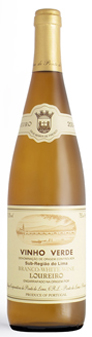
   摆在面前的是一瓶来自SUB-REGIAO DO LIMA 的洛雷罗绿葡萄酒2009,酒体新鲜,宛如处子。

酒名 葡萄牙洛雷罗绿酒

年份 2009

产地 SUB-REGIAO DO LIMA

酒精 11%

葡萄 洛雷罗

土壤 片岩,火山岩浆

酒色 微黄泛绿

酸度 新鲜酸甜

气泡 应该算是半起泡

酒体 年轻,轻盈

气味 淡雅,清脆,爽快

余味 悠长

                          总结


    洛雷罗绿葡萄酒,虽然没有Alvarinho的名气大,但是绝不输给Alvarinho。

    酒一入口,立刻弥漫青苹果与柠檬的酸鲜味道,味蕾立刻被唤醒,贪婪期待之下,演化出一股淡淡菊花的香气,尾声里还有一丝莫名的果蔬的甜味,仿佛是菱角的气息。舌尖有轻微的气泡的清脆回应,激活了香槟般的华丽记忆,却更加含蓄,悠扬,不彰显。中国成语有灯红酒绿一说,不知道是否古代也真有绿色美酒?相信葡萄牙绿葡萄酒一定于此无关。饮用前,冰箱冷藏几个小时。不过今天的配菜相当糟糕,因为嘴馋做了剁椒鱼头,本来鱼类是很合适的,但是剁椒实在是太辣了,掠夺,麻木了很多味觉,算是一个败笔。


 分享期酒这块大蛋糕

2010年03月16日

期酒之约:

最初为列级酒庄孕育而生的期酒市场,如今成为了各类酒庄争相参与的活动。酿酒人道出分得“蛋糕渣”的好处……

2009年份的葡萄酒是否能达到2005年份的水准?这还有待观望。不过,能确信这肯定是个品起来让人享受多、头疼少的大年。期酒会让人拭目以待。来自世界各地的五千名记者及买家每年相约来这里寻觅“宝物”。无疑,这场波尔多葡萄酒的预售活动是个在完全没有公众参与情况下的经济及媒体行为。在那里,人们竞相评论正在培育之中的葡萄酒,场面极其热烈。

当然,自2000年份一级酒庄价格翻倍以来,今年也会遭遇同样的问题:这些“火车头”是否会稳定价格,不彻底与其它车厢脱离?如果车头的价格继续大踏步前进,把其它酒庄甩在站台上,那么葡萄酒爱好者们也只好在那里挥着白手绢与领头羊酒庄挥泪告别了。

遗失的信心

由于经济危机触及到了大部分的葡萄园,今年的期酒会是不是只有那些“顶级阵营”才会参与?至少名气一般的酒庄和产区不是这样认为。

“我们要与这个本不是为我们而创的活动挂上钩”,AOC波尔多及特级波尔多(1)联会主席Bernard Farges说道,“我们不能不参与进来。想想要是期酒会在勃艮地,我们连参与的可能都没有。面对交易量下降的现况,葡萄酒市场各个环节的人们都需要重新找回遗失的信心。这场酒会首先会使波尔多从中受益。”

Marc Medeville(Fayau酒庄)强调说:“期酒会不会让酒庄发生什么革命性的变化。这个活动远没有六月开出朵漂亮的小花或是一场霜冻致使酒价格下降来的重要。但是,期酒会确实是向出口市场进行形象宣传一种无可比拟的方式。”

Laurent Mazeau(Laurent Mazeau葡萄园,波尔多)认为:“经过多年的努力,我们终于使葡萄酒的质量有了普遍的提升。如果期酒会进行的不顺利,之后,我们很难说服别人相信我们葡萄酒的信价比高。其实,期酒会对我们的影响顶多就是10%的销售量,但我们确确实实会受到相关影响。期酒会后,各买家会带着‘这是一个不容错过的年份’的认识回到世界各地。”

奢侈品和葡萄酒

“我们要抓住所有的曙光。期酒会就是其中之一”,Jean-Marc Landureau(Château d’Escurac,梅多克),“几年前,大酒的魅力可以作为小酒市场驱动器。不过,如今二者已完全分离开来。一边是列级酒庄奢侈品;另一边是葡萄种植业,他们对此充满了希望。我们正等着大家对这个年份葡萄酒的反响,特别是美国方面的,他们从2005年起就一直比较沉默。”

Jean Thomas Doublet(Vignol庄,波尔多;Tour de Calens,格拉夫)希望在这个封闭的领域里寻到更多可以相互交流的机会:“只有这样才能让别人了解波尔多,了解到波尔多的多样性,也了解到波尔多那些被掩藏的美丽。当然,我们的目的不是打破列级酒庄这些漂亮的橱窗。相反,有这些世界上最著名的牌子在手,我们没道理自己打击自己的士气。”

“高得令人发指的价格挫败了很多人的情绪”,Véronique Barthe(La Freynelle酒庄,波尔多两海之间)认为,“我们经常碰到跟我们说波尔多酒价格太贵的人。不错,这里是有奢侈品市场,但是也有普通葡萄酒市场。而无论如何,摆在我们面前的事实还是期酒会使得世界各地的人们聚集在这里品尝尚未成熟的葡萄酒,这就像魔术一样神奇。我们也能分些蛋糕屑。”

“期酒市场垮台对我们肯定不会有任何好处”,Stefaan Massart(Vilatte酒庄,波尔多)强调,“世界各地众多的产品迫使葡萄酒的价格下降。但是,我们的产区值得拥有大家更多的关注。我们都承受着价格战的痛苦。”

总之,期酒市场上令人质疑的高价引起的投机泡沫掩盖住了那些受人们低估、等待被消费且被公众认可的优质波尔多葡萄酒。

(1)这两个法定产区覆盖吉伦特省葡萄园一半以上,共63 000公顷,年产量超过三百万升葡萄酒。

《法国西南报》2010年03月16

记者:Christian Seguin

Translated by : 张彤彤 (Zhang Tongtong)

---------------------------------------------

Eating Future Cake:

EVENT :

Originally devised for the Bordeaux grand crus, the futures ('en primeurs') campaign now mobilizes vintners from all over the region.


They explain why even the crumbs are good.

Will the 2009 vintage equal that of 2005? Time will tell. It is, however, one of those superior quality wines, which will give consumers pleasure rather than headaches. In any case, the 'futures audience' is waiting : that's to say 5,000 journalists and buyers from all over the world whom Bordeaux entices into the most luxurious of its folds. The pre-sales campaign of Bordeaux wines, which is not open to the general public, remains an exciting economic and media-based event, during which the young wines still undergoing barrel ageing are appraised.

The recurrent question will be asked, as it has been since 2000 when the first growths doubled their prices : will the Bordeaux locomotive stabilize prices enough so as not to shake its wagons off the track and lose them in the middle of nowhere, leaving the consumer on the platform, waving a final goodbye with a white handkerchief?

Confidence Lost :

Is futures or 'primeurs' week, often percieved as a tasting bash for high-class guests, really justified, given this year's backdrop of economic crisis which has hit a large majority of the vineyard indiscriminately? Owners of wineries in less prestigious appellations do not see it in quite the same light. "We cling to a marketing campaign which was not designed for us," says Bernard farges, who is president of the AOC Bordeaux and Bordeaux Supérieur wine growers Syndicate (1). We cannot afford to distance ourselves. Imagine if the futures campaign was held in Burgundy. We are currently faced with a drop in sales transactions, and consequently need to regain lost trust among our operators. An event like this serves primarily to revive interest in Bordeaux."

Marc Medeville (Château Fayau) adds : "It won't revolutionize our case. Futures week is certainly less important to us than successful flowering in June or the impact of a harsh frost on the price of a 'tonneau' (900 litres of wine). However, it is an indisputable way of presenting our image to the export market." Laurent Mazeau (Vignoble Laurent Mazeau, Bordeaux) recognises that "After years of struggling, we have succeeded in improving the overall quality of our wines. If futures don't turn out well, it's much more difficult for us to explain that we offer good value for money wines. The impact for us is plus 10% - or not- but we are linked to the futures machine. Buyers from across the globe will go home knowing that this is a vintage not to be missed."

Wine and Luxury :

"We latch on to the slightest glimmer of a spotlight. Futures week is one such spotlight," claims jean-marc Landureau (Château d'escurac, Médoc). "A few years ago, the attention attracted by the great wines had an impact on the lesser wines market. Today, the dichotomy is obvious. Luxury on one side and wine-growing on the other. That said, the wine business is full of hope. We are expecting this vintage to provoke a reaction, especially in the U.S., where the market has not very active since the 2005 vintage."

Jean Thomas Doublet (Château Vîgnol, Bordeaux & Tour de Calens, graves) would like other ways of communicating in this rather exclusive world. "So that we can put across the fact that hidden within the sheer diversity of Bordeaux are great things. The aim is not to destroy the showcase. With the best known brand in the world, we have no reason to be demoralized."

"Prohibitive prices frustrate many people," observes Véronique Barthe (Château La Freynelle, Bordeaux Entre-Deux-Mers). We still meet people who say that Bordeaux wines are too expensive. The luxury market exists of course, but so does the wine market. However, we must face the facts : it is the futures event which draws the world here to taste an unfinished product. It's magic. We pick up some nice crumbs off the floor."

"It certainly would not help us if the futures campaign collapsed," underlines Stefaan Massart (Château Vilatte, Bordeaux). "it's the excessive market which continues to force prices lower. Our appellations deserve more attention. We all suffer from this situation."

Basically, the feared over-pricing of the 'primeurs' in the speculative bubble masks the under-evaluation of all the good, lesser-known Bordeaux wines which are worth getting to know, sell and of course taste.

(1) More than half of the Gironde vineyard, 63,000 hectares, with an annual production of more than 3 million hectolitres.

Sketch by Christian Gasset.

Author:Christian.Seguin

虽然在伦敦读书两三个年头,并曾经造访过波尔多、波尔图等地非常多的酒庄,然而各种事务缠身,一直都没有时间好好写下各样经历。惟有转载下其他达人以超然态度写就的一些极其具有参考价值的文章。这是2010年3月30日法国媒体的报道,在2009年波尔多期酒发布周的第二天早上见诸报章。


-------------------------------------------------------------------
Reported by César Compadre, Translated by 张彤彤 (Zhang Tongtong)

-------------------------------------------------------------------

 这周开幕的期酒会上大家普遍看好2009年份酒。梅多克最著名酒庄期酒会盛况特别报道。

在爬到坡顶,马上进波亚克村(Pauillac)酒庄的路上,要特别小心别错过右手边拉图酒庄隐蔽的大门。三个金属矮柱前的空地仅够停泊一辆汽车,在您递出邀请函后,酒庄的看门人(原工业巨头Clément Fayat的管家)才会降下矮柱,放您通行。

不过,要到酒庄办公区,还需开车缓行200米。车道旁是一片葡萄藤,有工人正满头大汗地把新桩用大锤砸进地里。葡萄农的工作非常辛苦,这也提醒了我们,在还没品到2009年份前,2010年的酿制工作已经进入正轨了。

Sonia Guerlou在电脑前仔细审查这周预约的访客,她的这份Excel表格长得见不着底。“共有九百多人预约,有些是去年12月就订下的。今年要来的人太多了,跟08年冷清的场面完全不同。其中,英国和中国酒商人数最多”,Sonia在酒庄专门负责安排访客预约事宜已经有七年的时间了。这个酒庄共占地72公顷,有60个雇员,在1855年被列级为一级酒庄,可谓是波尔多精英酒庄中的精英。

访客们被集中在两个大厅里,由酒庄管理人员接待。两个大厅都有可以欣赏到葡萄园的大型观景窗。摆在桌面上的三杯酒犹如礼拜仪式上的三个圣餐杯:一杯酒庄正牌酒,一杯副牌酒(Forts de Latour)以及一杯酒庄三级酒(Pauillac)。

据酒窖负责人Pierre-Henri Chabot介绍,“有时,品酒室的气氛就像修道院一样:有些人品完酒就离开了,一言不发。我们向来宾提供有关这一年份天气状况的信息单,有的人会提几个单子上没有涉及到的问题。”不过,所有人离开时兜里都揣着品酒笔记或是肩上斜挎着笔记本电脑。仅需要几分钟的时间,他们就获取了关于2009年份拉图酒庄各类酒的情况。

在离开酒庄时,我们与前来探寻的中间人(Courtier)交错而过。

拉菲施工中

还是在波亚克这个小村子,稍往北,向着目标拉菲庄前进。在这个村子里1200公顷AOC级庄园中,90%是列级庄,这个村庄真可谓是寸土寸金。

“今年预计会接待1200名专业人士,我们把品酒现场安排在了都夏美隆酒庄(Château Duhart-Milon)的一个有25个座位的品酒室”,从1983年起任技术总监的Charles Chevallier介绍道。这主要是因为拉菲庄(110公顷)正在施工,陈旧的住所将被新的酒窖所取代,另外,酿酒车间也将扩建。

因此,品客们都转战到都夏美隆酒庄,这是Eric de Rothschild先生在波亚克所拥有的另一个列级庄,面积约为78公顷,两个酒庄共有125名员工。在这里,来访者也会品尝到非常受大众欢迎的拉菲副牌。

在走出酒庄的路边,垂柳下,公鸡在鸡棚里打鸣,我们边走边数着已经施工或正在施工的酒庄们,前一阵是爱士图尔(Cos d’Estournel),现在轮到拉菲和邻居木桐,还有玫瑰庄(Montrose,Saint-Estèphe)、白马(Chevel Blanc,Saint-Emilion)以及伊甘庄(Yquem,Sauternes)。

这些酒庄在近十年里因葡萄酒价格上升赚到了数百万欧元,至少,利润的一部份又投回到了酒庄本身……

巴特利庄园访问量每日千人

在另一个波亚克列级庄巴特利庄园(Batailley,57公顷),Philippe Castéja在家里接待来访者。Philippe及他的家族拥有的波尔多葡萄园家产非常壮观:从波亚克起(巴特利庄以及面积为57公顷的浪琴慕沙庄),到圣埃斯泰夫(美景堡Beau site),穿过佩萨克-雷奥良(Barret庄),再到圣艾米利永(老托特堡Trottevieille),以及波美候(卡斯十字堡La Croix du Casse)。所有这些酒都可以在这一个品酒会上品到,酿酒部门主管Arnaud Durand负责筹备波亚克部分。

“我非常看好2009年的期酒会,酒庄也需要这样的活动”,除了酒庄主这个身份,Castéja先生也是酒商(Borie-Manoux公司,年营业额约三千万欧元,48个员工),同时,他还身兼1855年列级酒庄联盟主席(由Sylvain Boivert执行联盟日常事务)。

列级酒庄联盟中的26个梅多克酒庄也驻扎在了巴特利庄园,举行为期三天的品酒会。预计,巴特里庄每日将接待1000至1200名访者。

巴特利的邻居木桐庄(80公顷)内也是热闹非凡。在酒庄工作了35年的销售主管Hervé Berland引导着整个品酒会。

“我从来没感受过这么热情的期酒会。大约会有1500到1700名来客,第二间接待室也投入了使用。”在品酒桌上,除了木桐,大家也可品到两外两家由Philippine de Rothschild所有的列级酒庄,克拉米伦庄园(Chateau Clerc-Milon)及达玛雅克城堡(d’Armailhac)葡萄酒。

玛歌没有指示牌

在南边,产区与酒庄同名的玛歌酒庄里的气氛也大致相同。“我们将接待约1800名访客,方式很简单,就设在酿酒桶之间。期酒会又不是鸡尾酒会,来访者都是以专业标准进行品酒”,酒庄主管Paul Pontallier强调。

有些人为了避开期酒周的高峰人群,选择在这之前或之后来酒庄品酒,但是只有经过预约酒庄才会接待。“我们来波尔多10天,要品800种酒”,一位瑞士买手向我展开他长达三页的品酒预约时间表。

当然,如果品酒客希望在这场马拉松式品酒周内更有效率,节约路上往返时间,最好是提前仔细研究安排。在离开玛歌的路上,我们突然发现没有任何标写玛歌酒庄名字的牌匾。不过,当您到了梵蒂冈或是泰姬陵,是否也发现过类似指示牌?

虽然在伦敦读书两三个年头,并曾经造访过波尔多、波尔图等地非常多的酒庄,然而各种事务缠身,一直都没有时间好好写下各样经历。惟有转载下其他达人以超然态度写就的一些极其具有参考价值的文章。这是2010年3月30日法国媒体的报道,在2009年波尔多期酒发布周的第二天早上见诸报章。

===================================================================

This week's 2009 futures campaign looks set to be a promising one. Here's the report from the heart of the most prestigious vineyards in the Médoc.

On the châteaux road, on the top of the slope where appellation Pauillac begins, be careful not to miss the discreet entrance of Latour, on the right. There is just enough space to park your car before you come up against three metallic bollards which the security guard (who used to be majordomo for the industrial magnate Clément Fayat) lowers once you have shown your credentials.

In order to reach the office, you must drive 200 metres at a crawl, passing a plot of vines where labourers are working up a sweat using sledgehammers to drive new stakes into the ground. Wine-growing is arduous work and before tasting the 2009 vintage, we should remember that 2010 is already on track.

Sonia Guerlou is sitting in front of her computer, scrutinizing the visits planned for this week. Her Excel table is as long as a month of Sundays. “More than 900 visitors are scheduled. Some of the appointments were made as early as December. We’ve received an enormous amount of requests, unlike the rather slack 2008 campaign last year. In terms of numbers of professional visitors, the English and Chinese are out in front,” points out Sonia, who has been managing the visits schedule at Château Latour for seven years. This estate, with its vineyard of 72 hectares and a staff of 60 people, is one of the five first growths of the 1855 classification and the elite of the Bordeaux elite.

The visitors are welcomed by château executives in two reception rooms with large picture

bay windows that lookout over the rows of vines. The three glasses on the table are presented like an offering of three chalices : the estate’s premium wine, the second label (Forts de Latour) and the third (Pauillac).

“Sometimes the atmosphere is almost monastic : some visitors taste and leave in silence. Others ask a few questions which go beyond the information sheet with the vintage’s climatic conditions,” adds Pierre-Henri Chabot, the cellar master. Then it’s over, and everyone sets off again with tasting notes in their pockets or laptops over their shoulders. In just a few minutes it’s in the bag : their first impressions of Latour 2009. On the way out, we pass a group of brokers who have also come to form their own opinions about the new vintage.

Lafite Rothschild under construction :

Next stop Lafite Rothschild, a little further North, but still in the village appellation of Pauillac where almost 90% of its 1,200 hectares of AOC vineyard is now in the hands of classified ‘crus’ who fight over land worth millions of euros.

“1,200 professionals are expected this year, and we will be tasting in a reception room housing just 25 people at a time, in Château Duhart-Milon, “ explains Charles Chevalier, technical director of Lafite since 1983. Indeed, Château Lafite Rothschild (110 hectares) is

in the midst of renovation work. On the menu is the conversion of old dwellings on the property into a new storage cellar and an extension of the vat room.

Hence the about-turn to Château Duhart-Milon, another Pauillac (and classified) estate owned by Eric de Rothschild, with a vineyard of 78 hectares and a staff of 125.

Visitors will also be tasting Les Carruades, a second label very much in demand. On our way out of the property, as we pass by a chicken coop underneath the weeping willow trees, where cockerels are crowing, and we think about all the reconstruction work already completed or in progress in the great Bordeaux estates. Yesterday, it was Cos d’Estournel. Today it’s Lafite, and neighbouring Mouton, not forgetting Montrose (Saint-Estèphe), Cheval Blanc (Saint-Émilion) or Yquem (Sauternes). If not all, at least a part of the millions earned with the surge in prices over the last decade has been re-invested on the premises.

1, 000 a day at Batailley :

At Château Batailley (57 hectares), another classified cru of Pauillac, Philippe Castéja will be entertaining at his home. He and his family possess one of the greatest viticultural heritages of the Bordeaux region, which stretches from Pauillac (with Batailley, but also the 57 hectares of Lynch-Moussas) to Saint-Estèphe (Beau Site), into Pessac-Leognan (Barret) and on to Saint-Emilion (Trottevieille) and Pomerol (La Croix du Casse).

So many wines to prepare for the Pauillac tasting, by cellar master Arnaud Durand.

“I really believe in this 2009 campaign, and the vineyard certainly needs it,” underlines Philippe Castéja – who is also a wine merchant (Borie-Manoux : 30 million euros turnover, 48 employees) and president of the 1855 classified crus association, an organization run by Sylvain Boivert.

In addition to the 1,000 – 2,000 visitors expected per day for three days this week, Batailley will also be welcoming 26 Médoc properties as part of the Union of Grand Crus campaign.

Batailley’s neighbour, Mouton Rothschild, with its 80 hectares of premium vineyard, will also be a hive of activity. Hervé Berland, who is Mouton’s commercial director and has been at the château for thirty-five years, is poised for action.

“I have never known such enthusiasm. With 1,500 to 1,700 visitors, we are opening up a second reception room,” On the tasting table, a part from Mouton, will be the other two classified growths belonging to Philippine de Rothschild, Châteaux Clerc Milon (30 hectares) and d’Armailhac (50 hectares).

No signpost for Château Margaux :

The atmosphere is similar further South, in Château Margaux, located in the appellation bearing the same name. “We will be welcoming 1,800 visitors quite simply, in the middle of our vat house. The future tasting is not a cocktail party, and visitors are tasting in a professional capacity,” emphasizes Paul Pontallier, the château’s director. Sometimes certain groups come to taste before the crucial futures week, to “avoid the crowds”, but always by appointment only. “We are in the Bordeaux region for ten days to taste 800 wines,” explains a Swiss buyer, showing an impressive three page schedule.

Visitors who wish to be efficient and get the most out of their trip during this marathon must be organized. We notice, as we leave the château, that there is no signpost indicating Château Margaux? But do you find one on arrival at the Vatican, or when you approach the Taj Mahal?

Author: César Compadre

=====================================================================
       夏末秋初,意大利托斯卡纳的著名景色被称为一生不得不去的地方之一。可你知道冬天意大利吗?白色的雪?没有绿色的山丘?旅游淡季……NO,冬天的意大利同样有魅力。

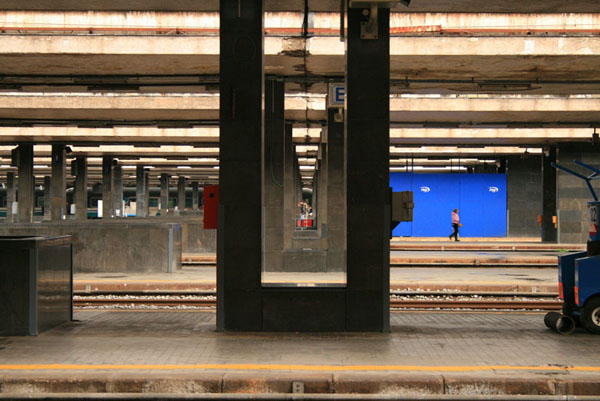
       清晨离开罗马,火车站主要月台都是欧洲之星或长途的普快。我们的车在E2站台,问谁都不知道,工作人员刚交接班,懒洋洋嘟哝着费解的话,直到开车前十分钟才搞清楚E2站台在里面,好像是一个副线。一阵狂奔,终于在最后一分钟赶上了火车,真玄。
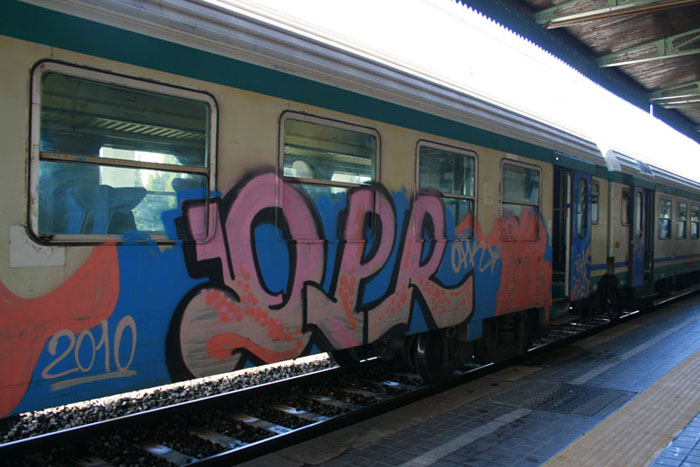
意大利的标识是按意大利人的思路来的,我们将一路领教下去。看看火车站和火车上的涂鸦,你会多是了解一下这个民族。

      每节车厢没几个人,竟然还碰上一个福建人,在一个小镇打工,他也找不到月台,跟着我们亚洲面孔的后面狂奔上车的。我们互相看着对方笑了。

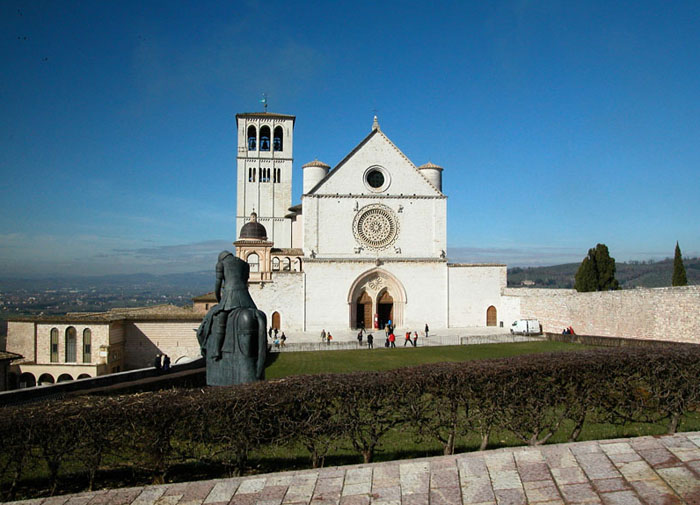
      我们的第一站是阿西西。这里只有2万多居民,但在西方世界赫赫有名,因为天主教史上的一位重要人物San Francisco诞生在这里。他本是那里的一个富商的独子,过着纸醉金迷的生活,一场重病使他性格发生变化,在旧教堂里,他听到了十字架上的耶稣的声音:“ Francisco,请修复我的教堂”。在上帝的召唤下,放弃财产和家庭,穿着简朴,传授清贫的可贵,强调尊重教皇,尊重麻风病人。他一生致力于建立Francisco修道院,很多人被他的生活方式所吸引,获得众多信徒的追随。他口才出众,据说在一次传教时,一群鸟也停下来,听得一动不动。Francisco死后被追谥为圣徒,他的传教学派译作“圣方济各会“。美国旧金山,其实就是他的名字的中文译名,可见其影响之大。


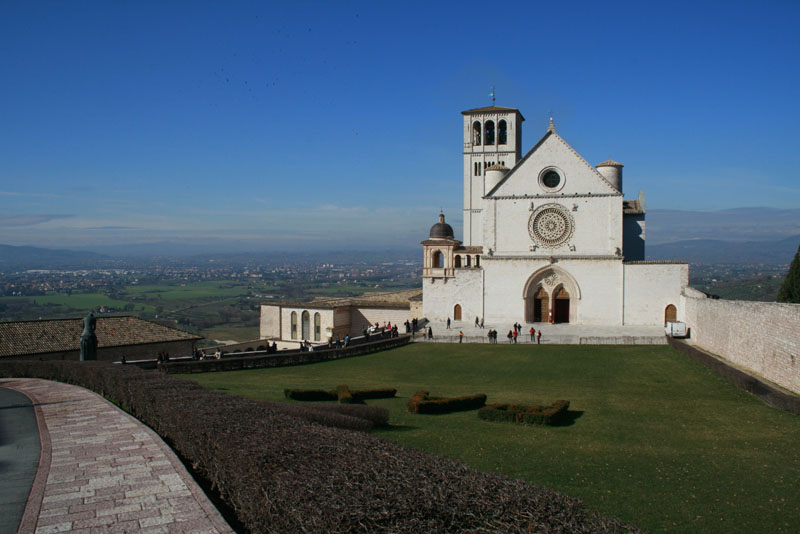
       这里最重要也是最美的建筑是San Francisco教堂,这是世界上最重要的宗教和艺术殿堂。它奇特之处还在于是上下两个教堂,各有单独出入口,也就是上面的教堂建造在下面的教堂之上,利用坡地高差分别出入,像重庆的楼,可是那是建造于1228年!我也是第一次看到这种两层的教堂,意大利的建筑材料和建造技术真是好生了得,佩服!意大利人是工程师……。

       这天是我们意大利行之中天气最好的半天,蓝天万里,阳光灿烂,我不敢怀疑神的力量。
阿西西能见到很多日本、韩国、台湾的游客,未见大陆旅游团


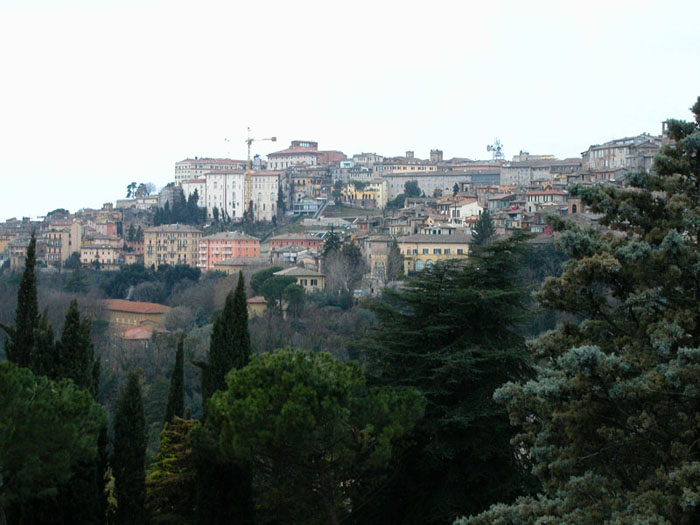
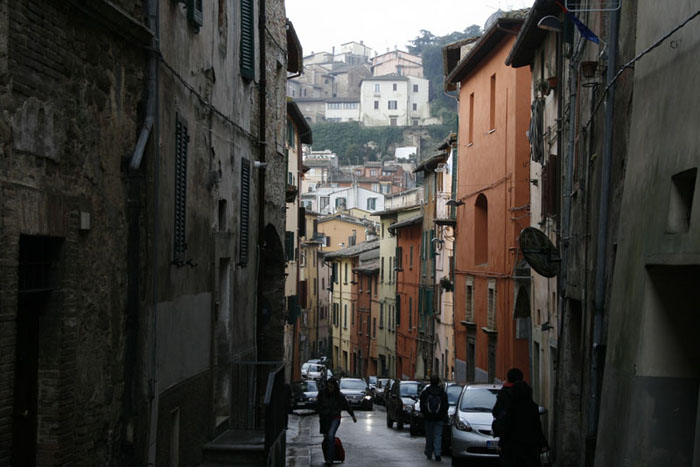
       古老的山城佩鲁贾,全城坐落在海拔500米的山丘斜坡上,房屋一层高出一层,陡峭狭窄的街巷和小广场,让我恍惚觉得是电影瓦尔特保卫萨拉热窝里的场景。

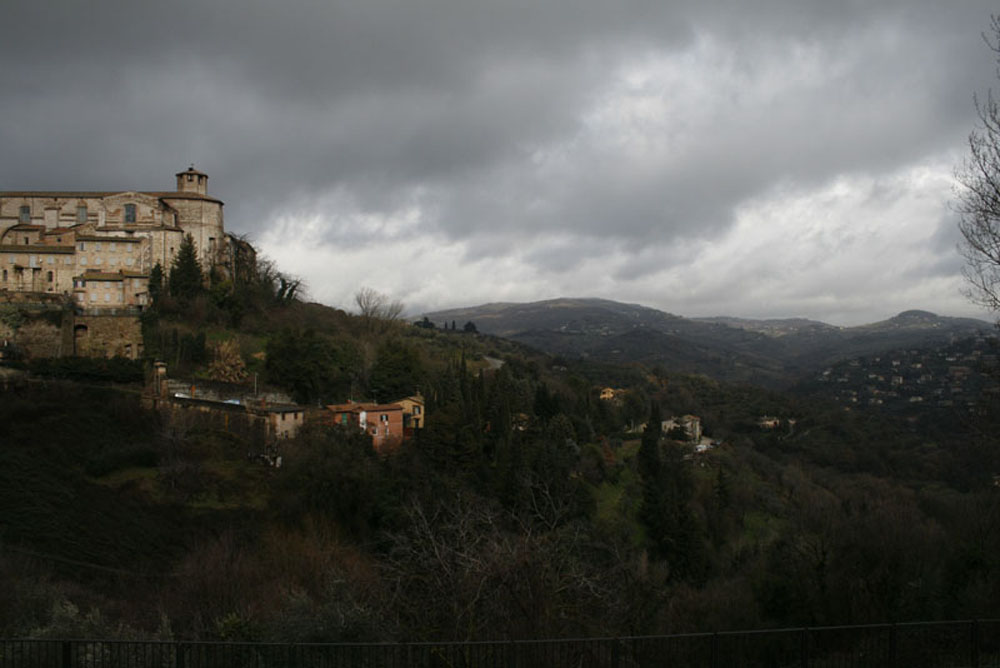
      佩鲁贾的自然风光,是历史上翁布里亚画派一再入画的题材。

       夜宿佩鲁贾,酒店的侍酒师很专业,餐前白葡萄酒是酒店送的,还有好吃的迷你面包棍,红酒我只说了句“House wine”,侍酒师拿来的是我在意大利喝过的最好的餐酒,也是最便宜的,只有8欧元。都说翁布里亚的好酒都留给当地人喝,一点不假,他们的酒是不外销的。
       第二天早上离开佩鲁贾前,去朝拜了一下世界上资格最老的学府之一——佩鲁贾大学(建于1200年)。


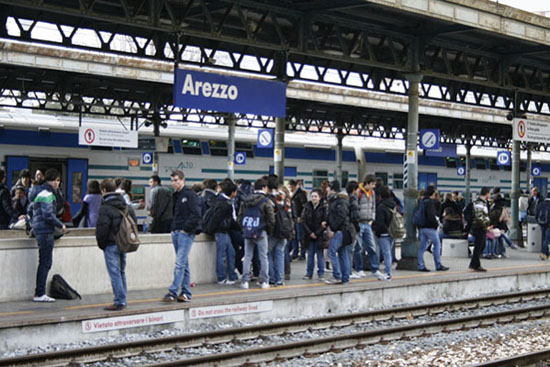
       途径阿雷佐,正是下午学生放学时,附近的孩子们乘火车上学的不少,意大利火车和公交一样方便,也不贵,自己在自动售票机上搞定即可。候车时看见站台上一个蓄有络腮胡子的人,带着眼镜,好像哲学家,我正这么想着,他主动上前搭讪,听说我们来自中国,非常亢奋,他竟然能说出胡锦涛、邓小平,还知道四人帮里面有一个是毛的夫人,听得我背上出汗!果然是学政治哲学的!可是我真不愿意谈那一段历史,我也没法表达。

       火车站的售票员告诉我,要去锡耶纳不用坐火车了,乘大巴更方便,火车反而绕路。于是我们做上大巴,在托斯卡纳弯弯曲曲的乡间小路上驶过,一路风光到了锡耶纳!
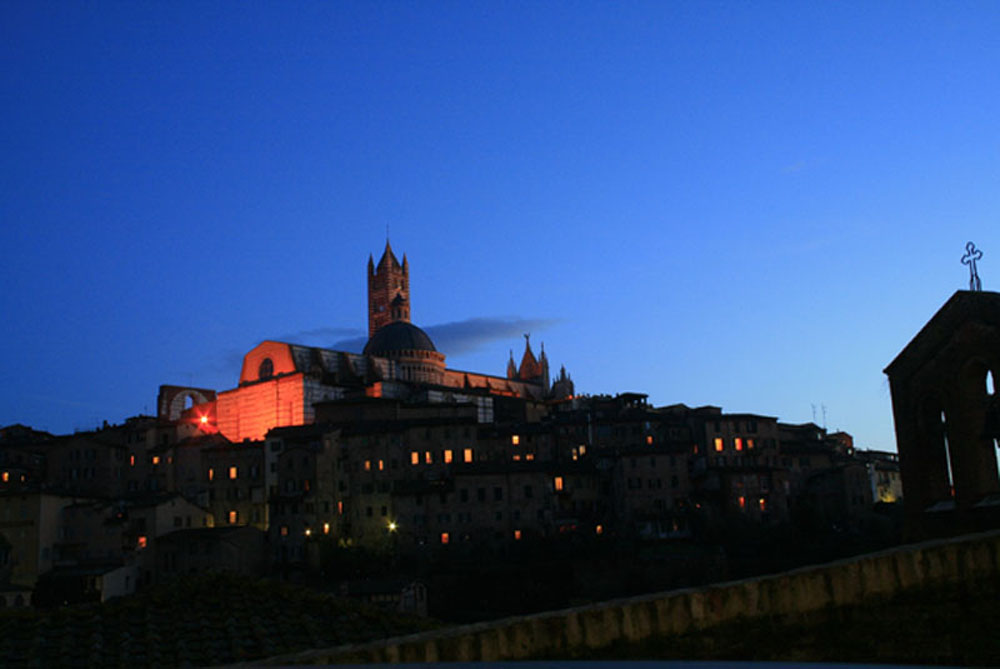
      锡耶纳是我神往已久的意大利腹地,小城很浓缩,经典,有味道,特别适合游人,是一个离开也会留驻心头的美丽地方。

      彷佛回到中世纪,夕阳下,一个老人,牵着条老狗,指点我们旅馆的方向,然后不即不离的远远跟随着我们,直到我们找到地方——古城的一个城门处。进了锡耶纳心就散了,孩子要看锡耶纳足球场,老公要拍余晖中的古城墙,我见了酒庄就泡在里面出不来了。
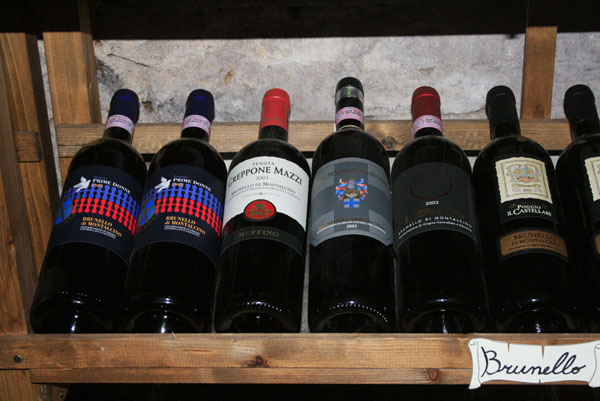
酒庄主人是个中年男子,很斯文的那种,也不打扰我,直到我开始向他讨教酒。老公推门而进,一看这架势,知道我断不会马上离开,说:“ok,买这瓶,那瓶,也买”。
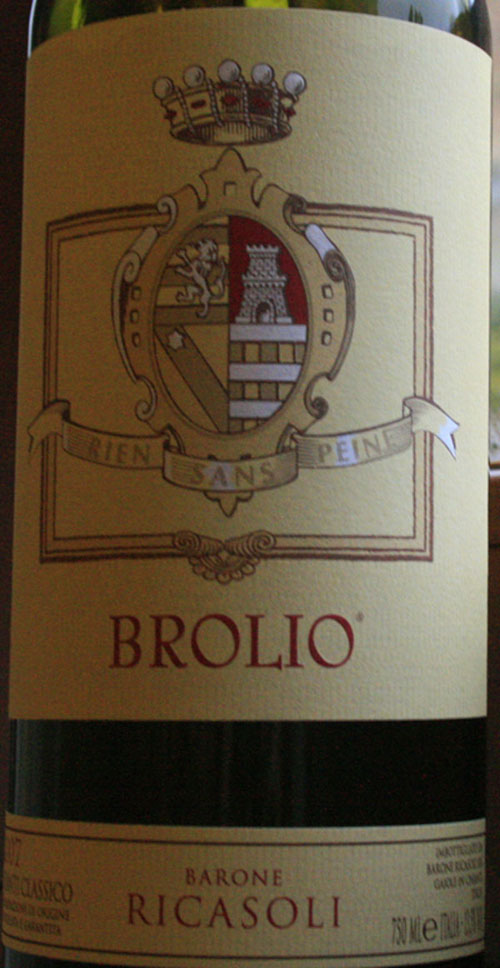
       这款就是老板推荐的, 15欧元。Brolio城堡位于托斯卡纳中部,他的主人Ricasoli家族1141年就拥有它了。(别跟意大利比历史了,古老的东西太多)

        这款酒具有经典Chianti的传神,香气不错,口感很好,细致柔和,配上我爱吃的烤茄子,橄榄油泡墨鱼仔,意大利沙拉密,令人难忘的锡耶纳之夜。


       第二天我端出秘藏心底的计划,提出要去Chianti地区转转。拿出地图去咨询售票员,她摇头,叽里咕噜一通,我一脸茫然,不知所云,特尴尬。又去问大巴司机,也没结果,我最怕这种情况出现了,急死人,忽然灵光一现,干脆去圣吉米纳诺!

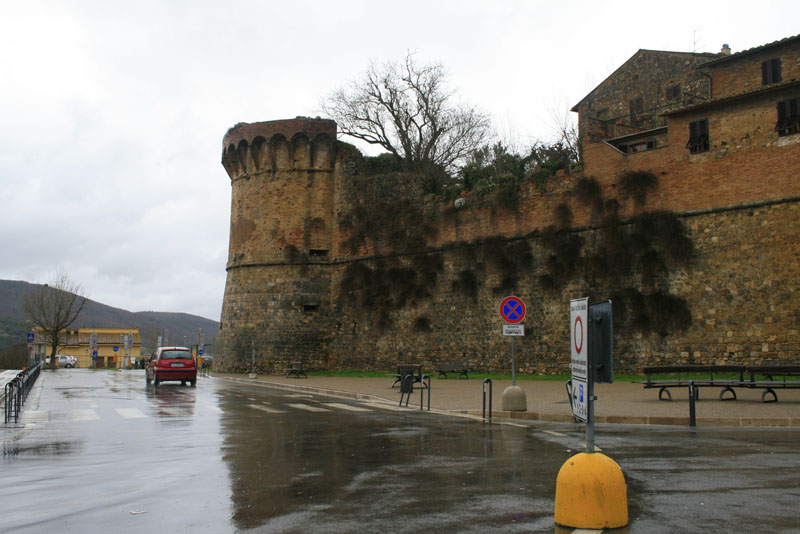
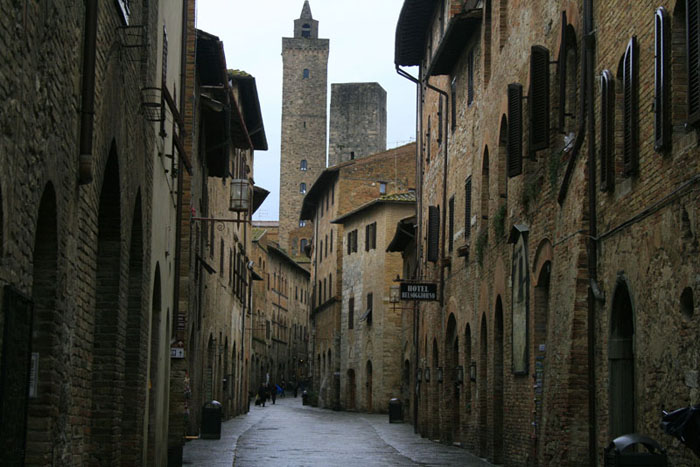
       这座小城只有7千居民,但在中世纪却是富裕的城邦。古代的城墙至今仍弥漫着中世纪残留的气氛,墙上长出很多野草,看着心里凉凉的。

      圣吉米纳诺也叫美塔之城,是中世纪贵族富家住的,以高度来显示自己的财力,居高临下,监视防卫都方便。虽然没啥设计,高度还是有的。


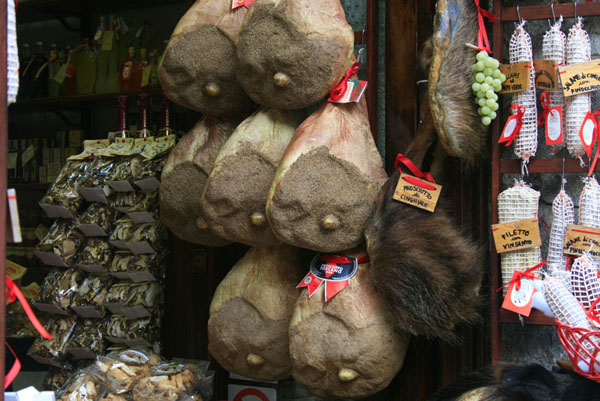
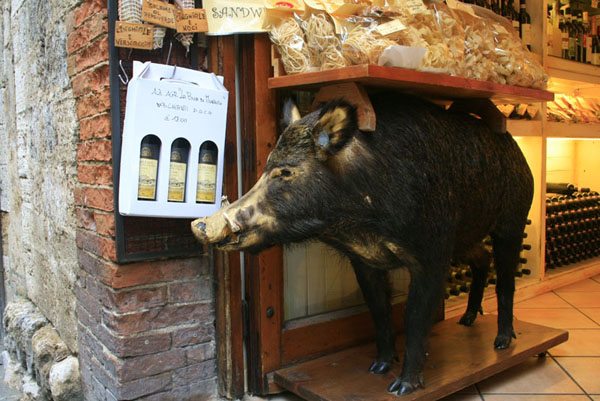
      旅游城市,野猪肉火腿很诱人……。

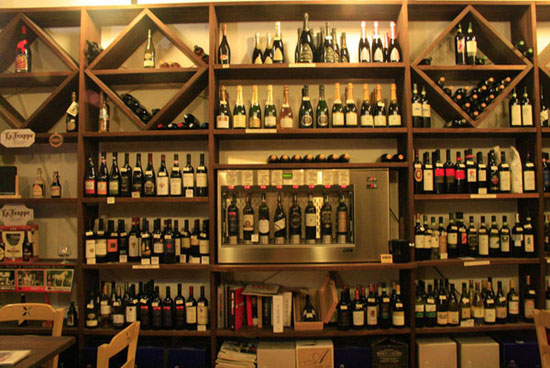
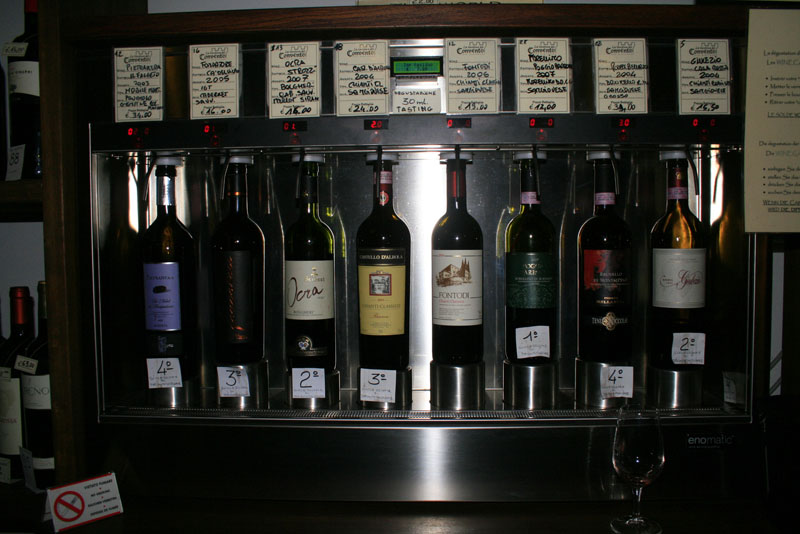
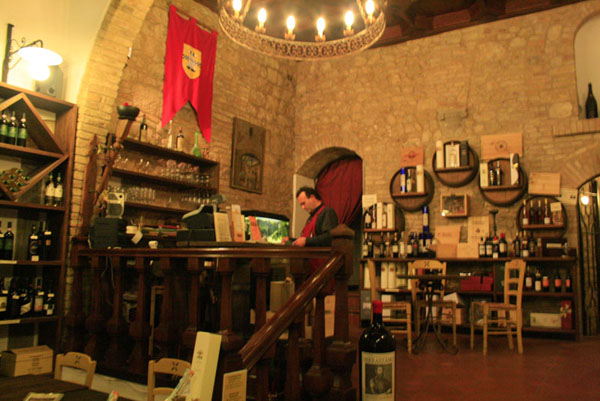
      发现一家酒庄,可是主人不在,门上留了个字条“有事外出,马上回来”。仔细观察了一下,这家酒庄有品酒机,一下挑起了我的兴趣。无奈四处逛完,店主还没回来。眼看太阳落山,最后的返程车票是18:00,我喝下最后一口咖啡,不甘心,再去看看。好好运,店门开了。
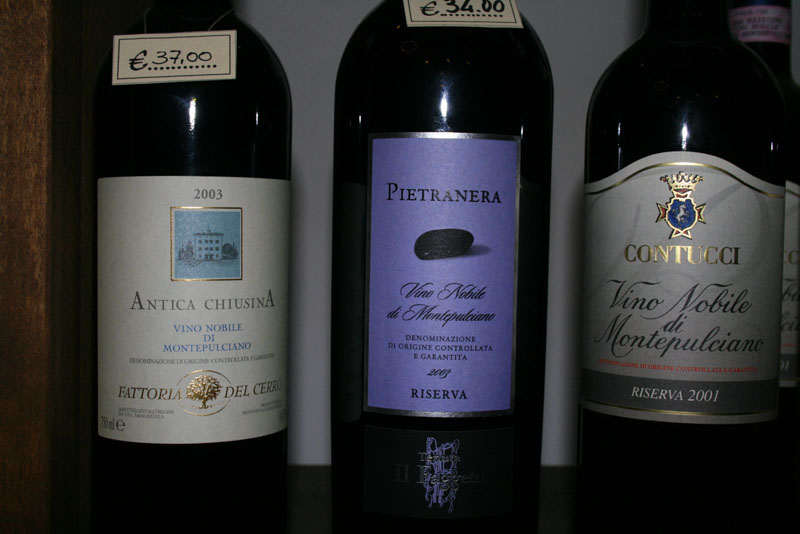
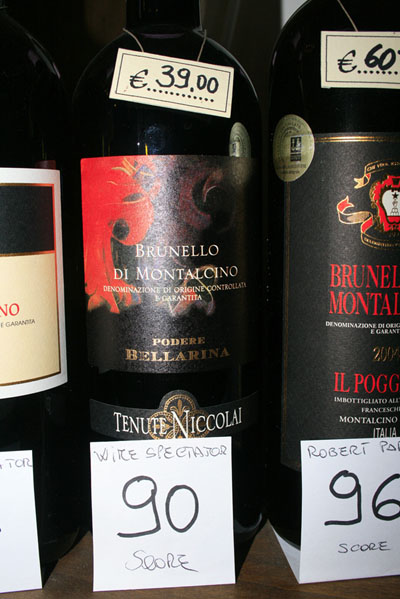
       店里有两个品酒机,钦一下按键,一次流出20毫升的样子,如果还想喝,就再按一次,或换其他款,每次2-4欧元。两个机器有16款酒,如果想喝店里的其他酒,只能买一瓶尝试了。有的酒还标有RP的评分。


我兴趣盎然的喝了好几款,似乎晕乎的感觉初现,歇歇。店主请我参观酒窖。他介绍自己有葡萄园,就在城外。刚才他就是去庄园了。拿出他们自产酒招待我,见我欢喜,特价卖我,呵呵。


       时间过得真快,我不得不离开,真有点恋恋不舍,意大利啊,还有很多很多这样的美丽的小城,只能下次再来了……
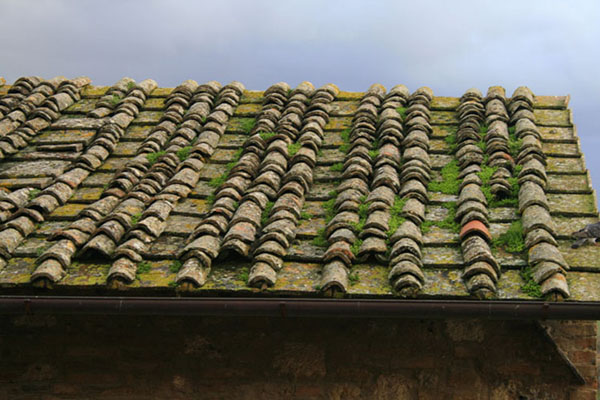
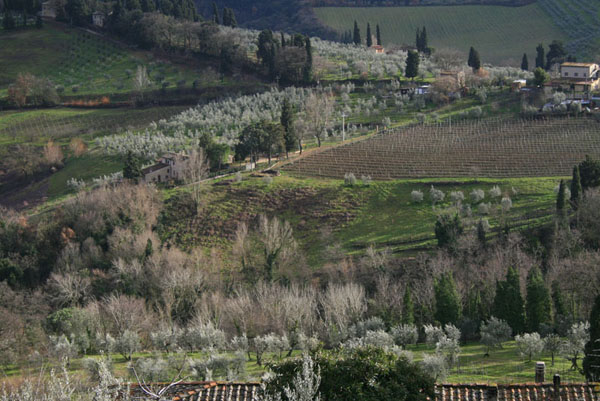
最后这张图片是在城里远眺的图片,回来后发现颜色很丰富,这就是意大利中部的冬天真实的颜色!就是这么美!